
Courses/Leadership & Management/Managing Difficult People
Managing Difficult People
A scenario-based e-learning course on managing difficult people — telling a difficult person from a difficult day, before the label sticks.
 ▶ Preview the course
Overview
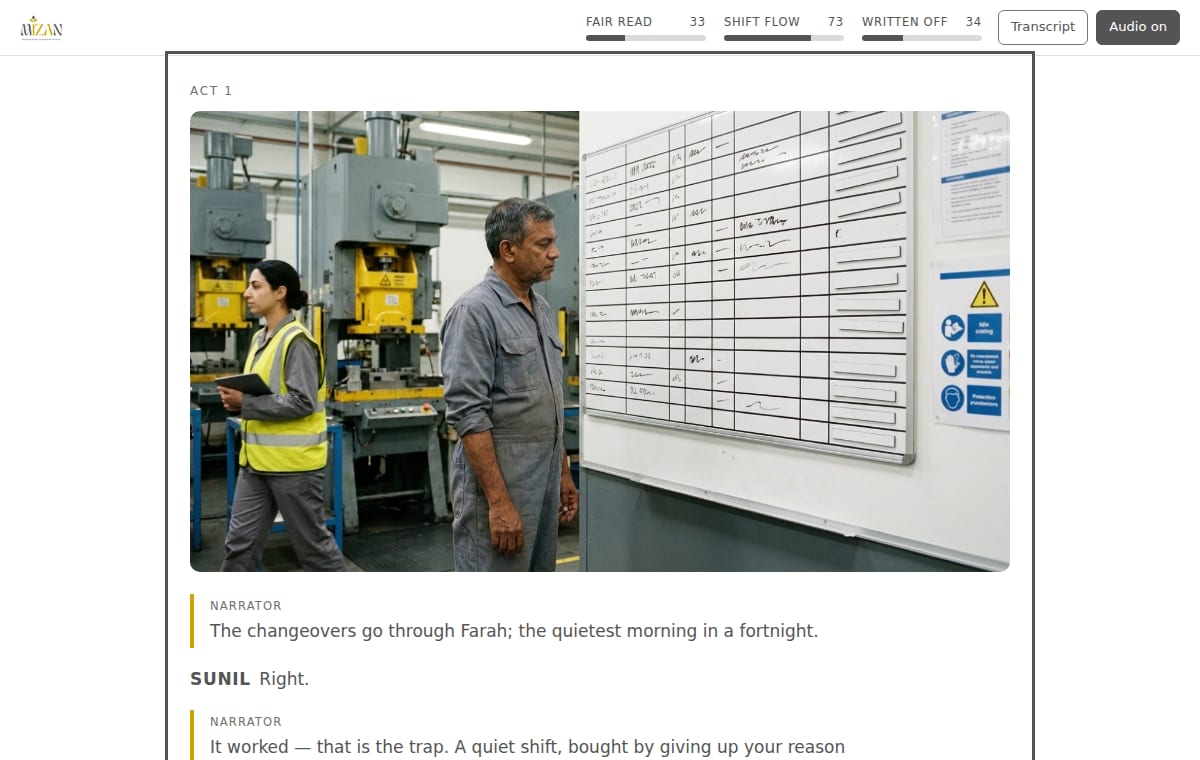
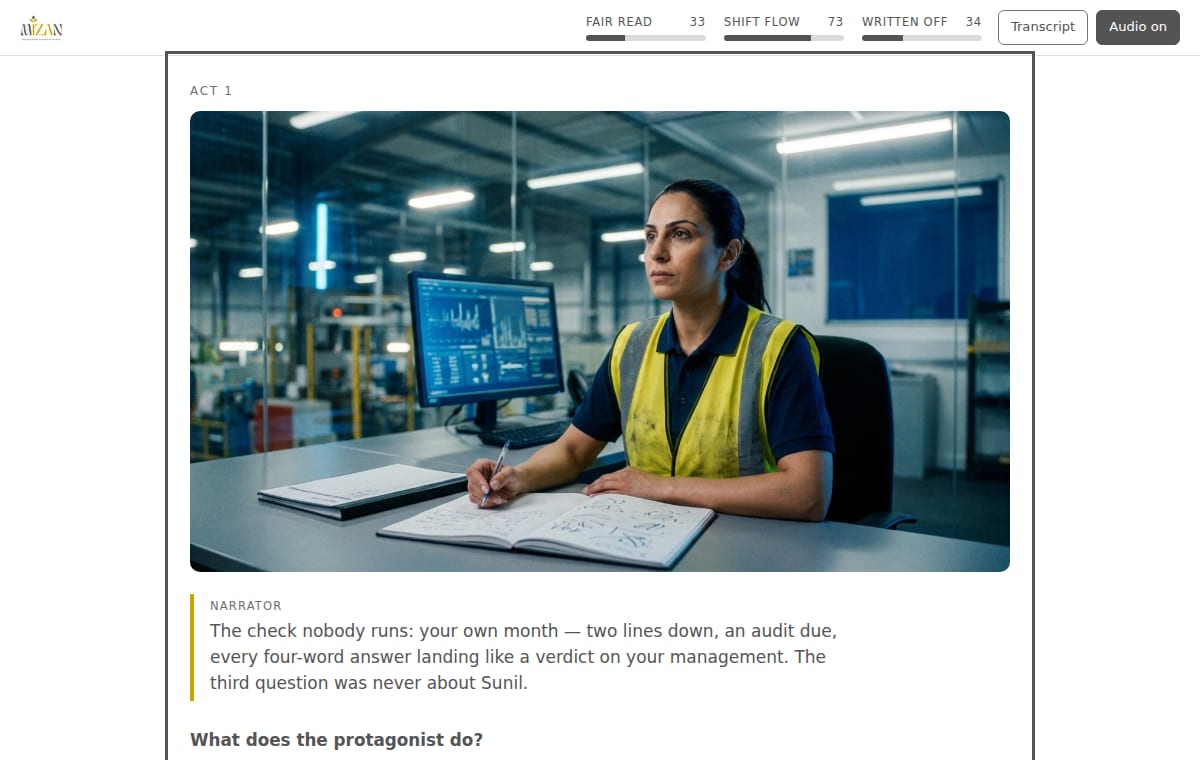
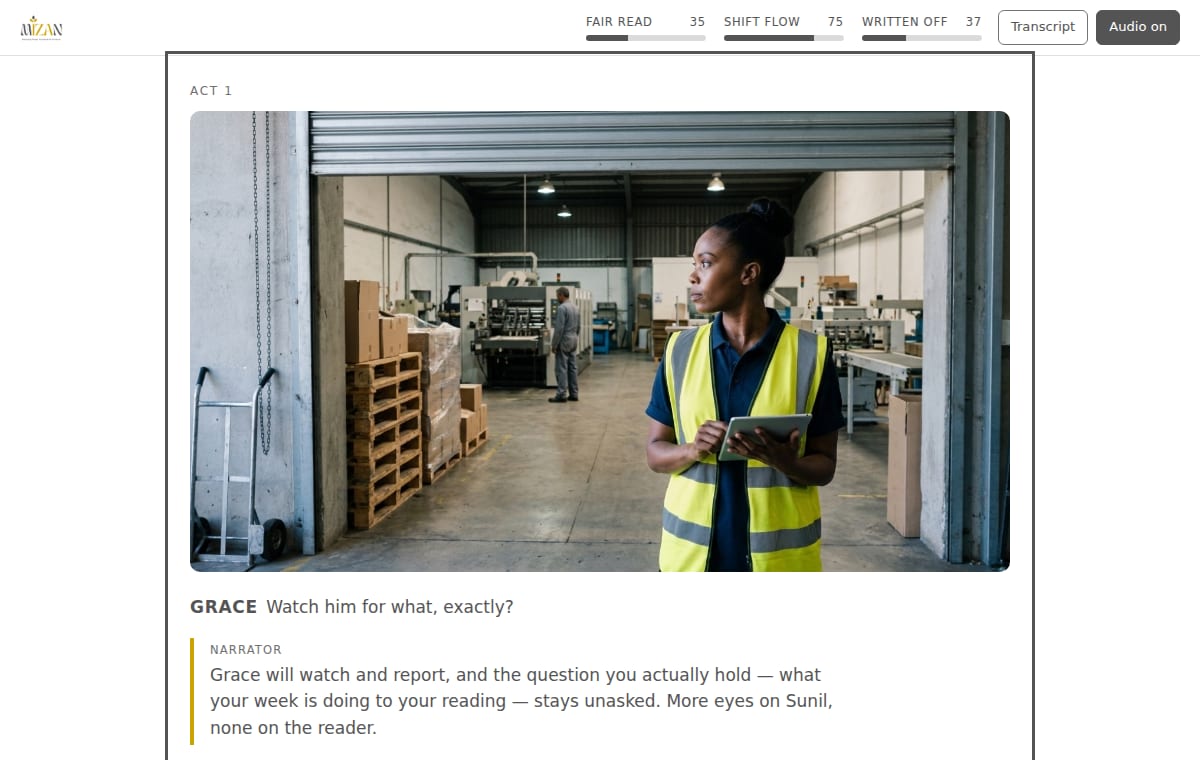
A scenario-based, self-paced e-learning course on managing difficult behaviour at work. Managers step into a working relationship that has gone quiet, choose how to respond, and watch Fair Read, Shift Flow and Written Off move in real time — then learn the three checks that test a label before it sticks. Delivered as a SCORM 1.2 package for your LMS, with completion tracking.
Format. Self-paced, scenario-based e-learning. SCORM 1.2 — upload it to your LMS and completion tracks automatically.
Runtime. About 21 minutes of learner time, in 4 sessions the package spaces 2, 5 and 30 days apart. Measured from the narration in the package at the speed it plays, plus the time to read and answer what is on screen. It assumes you listen rather than reading ahead; times vary with the path you take and how fast you read.
Who it is for. Any organisation that wants to run this as self-paced learning; suitable for employees at any level.
What learners take away
- Identify the ten main types of difficult people and the intents behind their behaviors.
- Distinguish genuinely difficult people from people reacting to a difficult situation.
- Apply practical strategies for handling difficult behavior, including staying calm, assertive communication, active listening and a problem-solving approach.
- Recognize personal hot buttons and manage reactions when they are pressed.
- Reflect on your own attitudes, biases and behaviors, and reframe negative attitudes into constructive ones.
Course outline
Introductions, scene-setting and the three objectives that frame the session.
Participants define difficult behavior, examine why people exhibit it, and learn to tell a difficult person from a person in a difficult situation.
Dr Robert Bramson's classification covering hostile-aggressive types, confrontation avoiders, those who hold you back and know-it-alls, applied through a scenario-matching activity.
A quadrant model mapping the ten types by task or people focus and passive or aggressive attitude, plus a brainstorm on other difficult types such as the victim, the gossip and the micromanager.
Do's and don'ts, staying calm and hot buttons, focusing on behavior rather than people, assertive communication, active listening and a problem-solving approach, practised through response exercises and role plays.
Unconscious bias, reframing negative attitudes, a personal accountability questionnaire and a self-reflection worksheet participants keep for future use.
Objectives revisited against the behaviors and responses covered, with a short check on what to apply first.
What you get
SCORM 1.2 package
A self-contained course you upload straight to your LMS — no installation, no dependencies.
Completion tracking
Reports status and completion back to your LMS like any SCORM course.
Scenario-based
Learners make real decisions inside a workplace story and see what each choice costs.
Per-organisation license
Host it for unlimited internal learners — one-time purchase, no per-seat or renewal fees.
The license in one sentence
Buy once and host the course on your own LMS for unlimited internal learners — no per-seat and no renewal fees. You may not resell or redistribute the SCORM package itself. Full license terms
More in Leadership & Management
View allChange Management and Leadership
A scenario-based e-learning course on leading people through a change they did not choose.
Coaching Skills for Leaders and Managers
A scenario-based e-learning course on coaching as a manager — resisting the pull to hand over the answer, and asking the question instead.
Delegation Skills
A scenario-based e-learning course on delegating well — handing work over without losing control or dropping the ball.